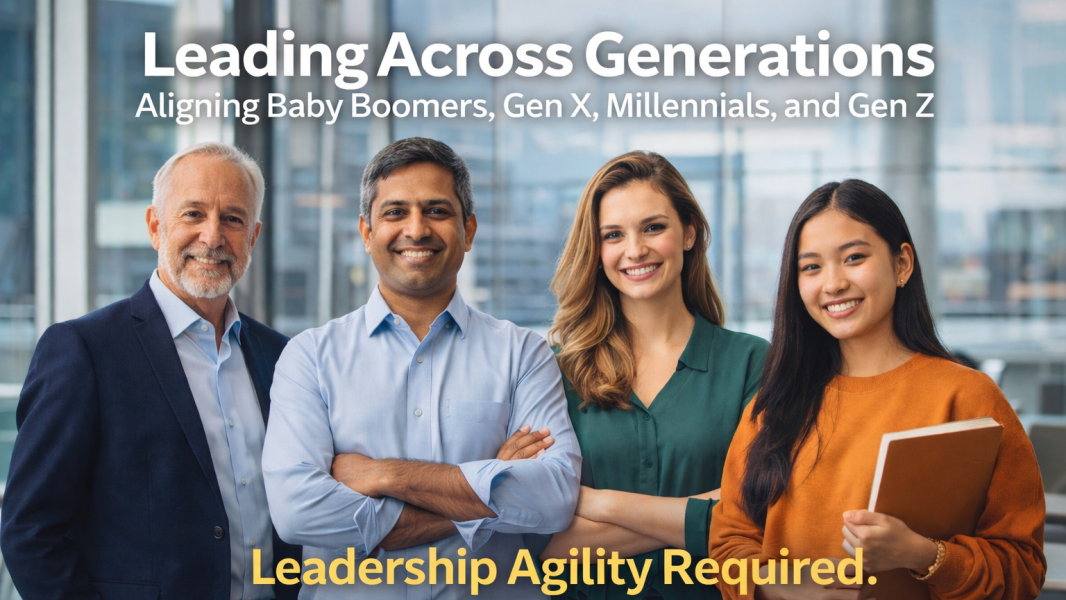
For the first time in modern organisational history, four generations are working side by side in the same teams, reporting to one another, and shaping strategic decisions together.
Baby Boomers, Gen X, Millennials and Gen Z bring different experiences, expectations and definitions of success. Yet many leadership models still assume that one style fits everyone.
That assumption quietly erodes engagement.
What leaders often interpret as resistance is frequently a mismatch in expectations.
Baby Boomers often value stability, experience and institutional continuity. When their accumulated wisdom is dismissed in the rush for speed, trust erodes quickly. They respond best when their legacy is acknowledged and their experience is integrated into future strategy.
Gen X leaders, shaped by independence and self-reliance, value autonomy and clarity of outcomes. They tend to disengage when micromanagement replaces trust. For them, leadership credibility comes from efficiency, results and the freedom to execute.
Millennials, who now form the largest segment of the workforce, look for meaning in their work and visible opportunities to grow. They tend to stay where development is real, not promised. Mentorship, transparency and regular feedback matter far more than hierarchy.
Gen Z enters the workplace with different expectations altogether. They seek authenticity, rapid feedback and leaders whose actions reflect stated values. They engage when communication is honest, inclusive and immediate.
The leadership challenge is not about choosing which generation to prioritise. It is about expanding leadership range.
Effective leaders today understand that fairness does not mean identical treatment. It means consistent standards delivered through different communication styles, motivational triggers and development pathways.
A leader who speaks only the language of hierarchy may struggle to engage a generation that values openness. A leader who prioritises speed without acknowledging experience risks losing institutional wisdom. And a leader who delays feedback in a world of real-time communication creates unnecessary distance with younger talent.
What organisations increasingly need is leadership agility, the ability to adapt communication, recognition and development approaches without compromising expectations or accountability.
In practical terms, this means leaders learning to honour legacy while encouraging innovation, granting autonomy while maintaining alignment, offering mentorship while inviting collaboration, and providing faster, clearer feedback across teams.
The organisations that succeed in the coming decade will not simply have younger workforces or more experienced executives. They will have leaders capable of aligning multiple generations around shared goals.
That alignment is not accidental. It is a capability that must be developed deliberately.
At AssessPro, we work with organisations to strengthen leadership judgment, adaptability and decision quality, the capabilities that enable leaders to navigate complex, multi-generational environments with confidence. Because the real leadership advantage today is not authority. It is the ability to inspire people who think, work and expect the workplace differently…